


Babagana’s story of recovery
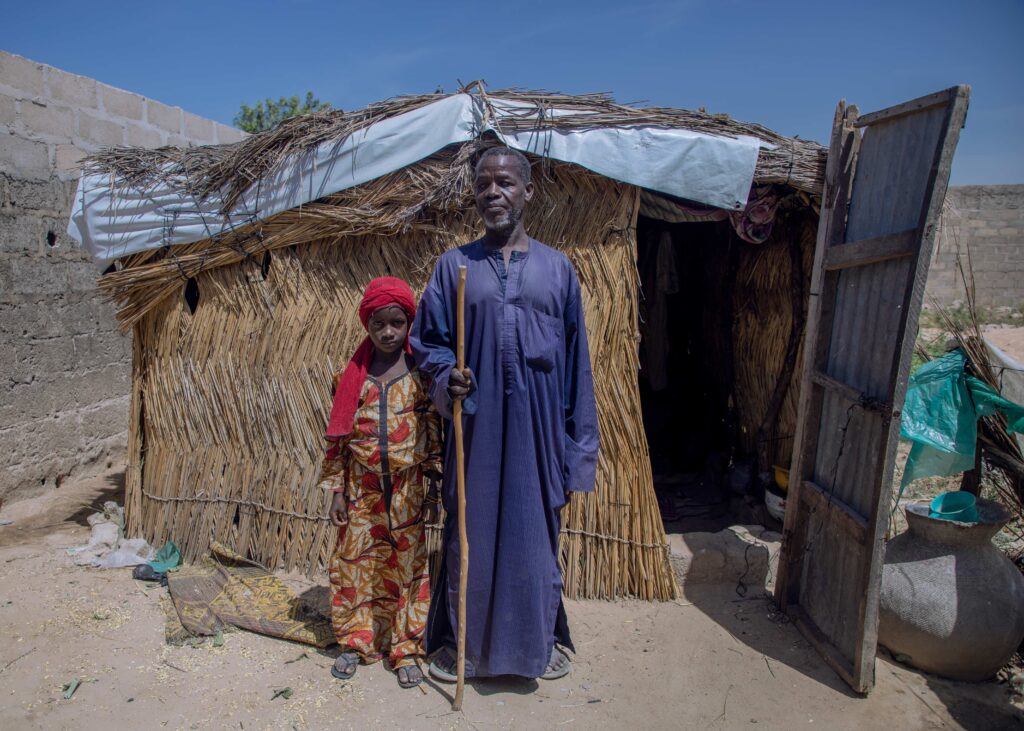
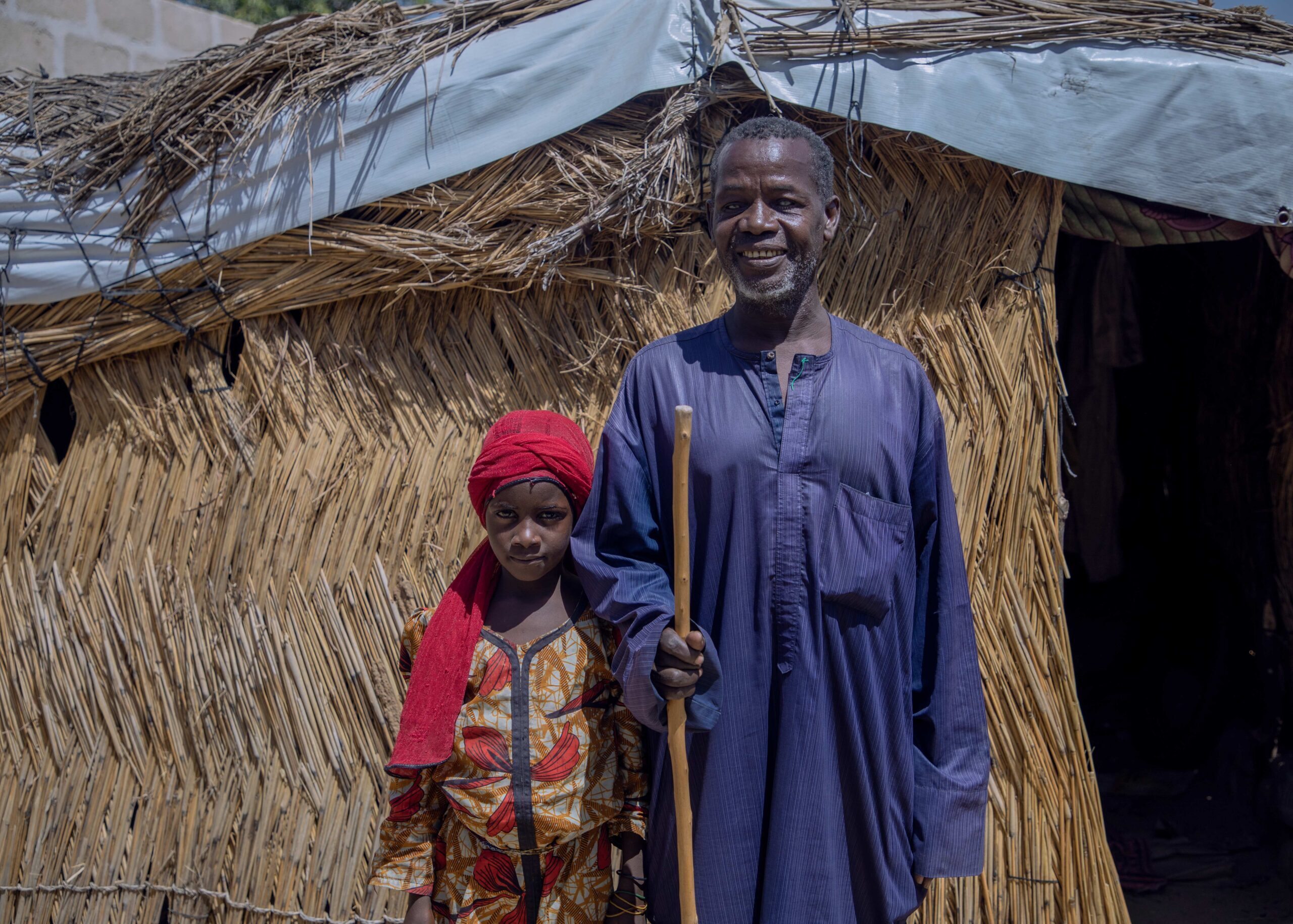
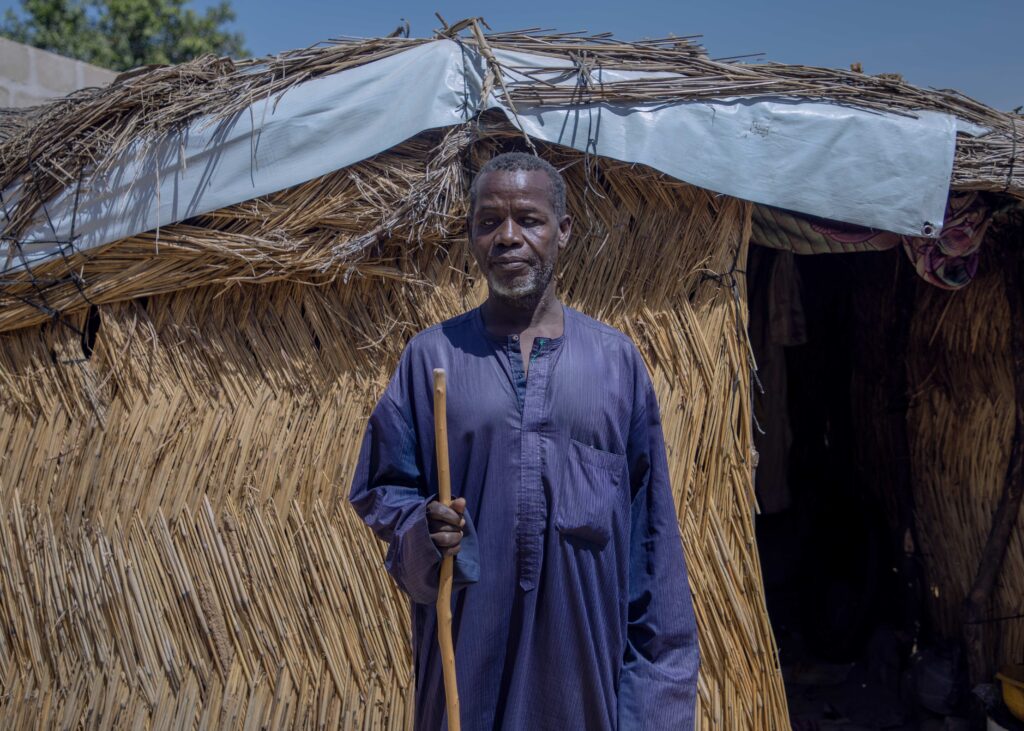
Babagana Aribe stands with his daugher outside the thatched shelter he rebuilt using part of the cash assistance. Photo: Vashawa Innocent Paul/FRAD
When an attack destroyed his village in Mafa, a 55-year-old father lost far more than his home. He lost his wife, his livelihood, and the sense of security he had built over a lifetime.
Forced to flee with his five young daughters, he sought refuge in a nearby host community. But as a visually impaired man in an unfamiliar place, surviving day-to-day quickly became an overwhelming struggle.
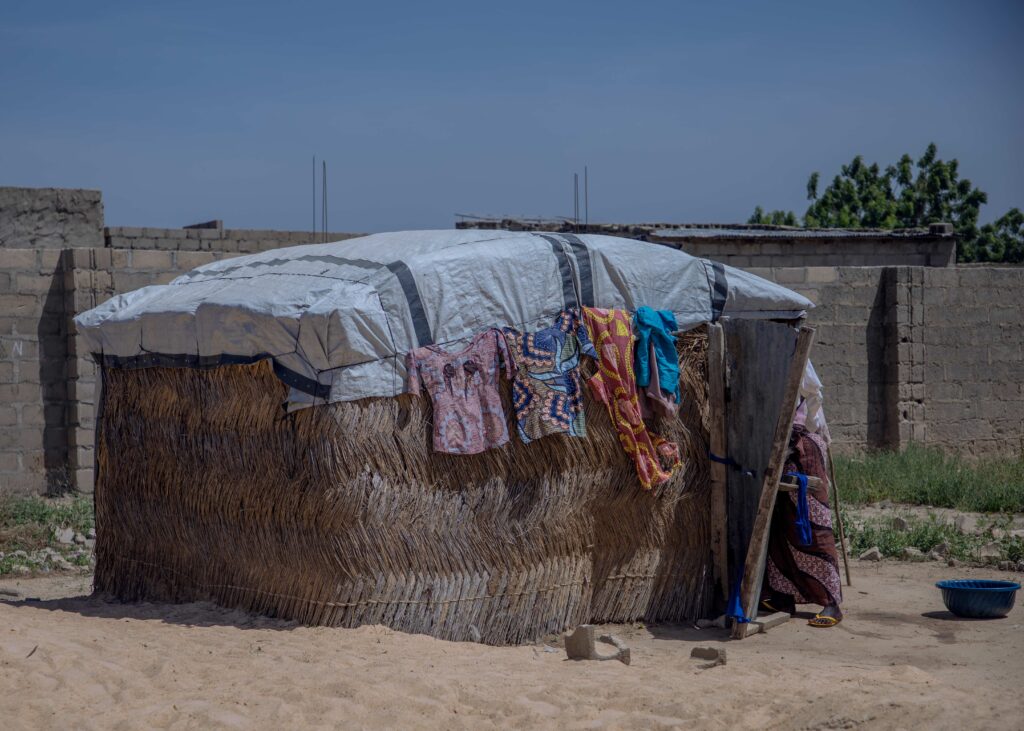
Without an income or basic household items, the family was squeezed into a makeshift thatch shelter. It offered almost no protection against heavy rain or scorching heat. Extreme poverty set in, and with no formal support, the father had no choice but to rely on his young daughters to guide him through the local streets to beg for food.
Instead of spending their days learning or playing, his daughters spent them navigating public spaces to keep the family fed. The arrangement exposed the family to harsh weather, public judgment, and degrading treatment from passersby, taking a heavy emotional toll on both the father and his children.
A turning point for the family
Recognizing the extreme risks the family faced, team members conducted a protection assessment to understand their immediate needs. The situation called for urgent intervention not just to keep a roof over their heads, but to safeguard the children and help the father manage severe emotional distress.
Working in partnership with the Norwegian Refugee Council (NRC), Individual Protection Assistance (IPA) was delivered to address the family’s most critical needs. The support provided essential household items and financial aid to secure a safer, weather-proof home.
Alongside physical aid, the father received Psychological First Aid and ongoing Psychosocial Support. Dealing with the grief of losing his wife while navigating displacement and visual impairment had left him isolated. Having regular counseling sessions gave him a safe space to process his trauma and rebuild his emotional resilience.
The support didn't just give us shelter and basic items but gave my daughters back their childhood and restored our dignity when we felt completely forgotten.
Babagana Aribe
Looking toward the future
Today, the family’s daily life looks very different.
With a secure place to live and basic necessities covered, the immediate pressure on the daughters to beg for food has eased significantly. Reclaiming their time allows the girls to focus on being children again and opens up possibilities for returning to school.
While the loss of his wife and the reality of displacement remain difficult challenges, the father now feels more grounded and better equipped to care for his household. The assistance provided more than temporary relief—it gave a father back his independence and offered his daughters a chance at a brighter future.